Welcome! I am an Isagenix Independent Associate. I’m here to share my personal journey and help you find the right nutritional solutions for your goals.
You can have the cleanest morning routine, the best collagen powder on your shelf, and a fridge full of colourful whole foods, but if you’re not using the right sun protection your skin can still end up paying the price. When people search mineral sunscreen vs chemical, they are usually not looking for a chemistry lesson! They want to know what will feel good on their skin, what will suit their lifestyle, and what they will actually wear every day.
That is the real goal here – not chasing the perfect label, but choosing a sunscreen you can use consistently as part of a balanced wellbeing routine. If you are trying to support healthy ageing, protect your skin barrier, and make more intentional beauty choices, understanding the difference matters.
Mineral sunscreen vs chemical: what is the difference?
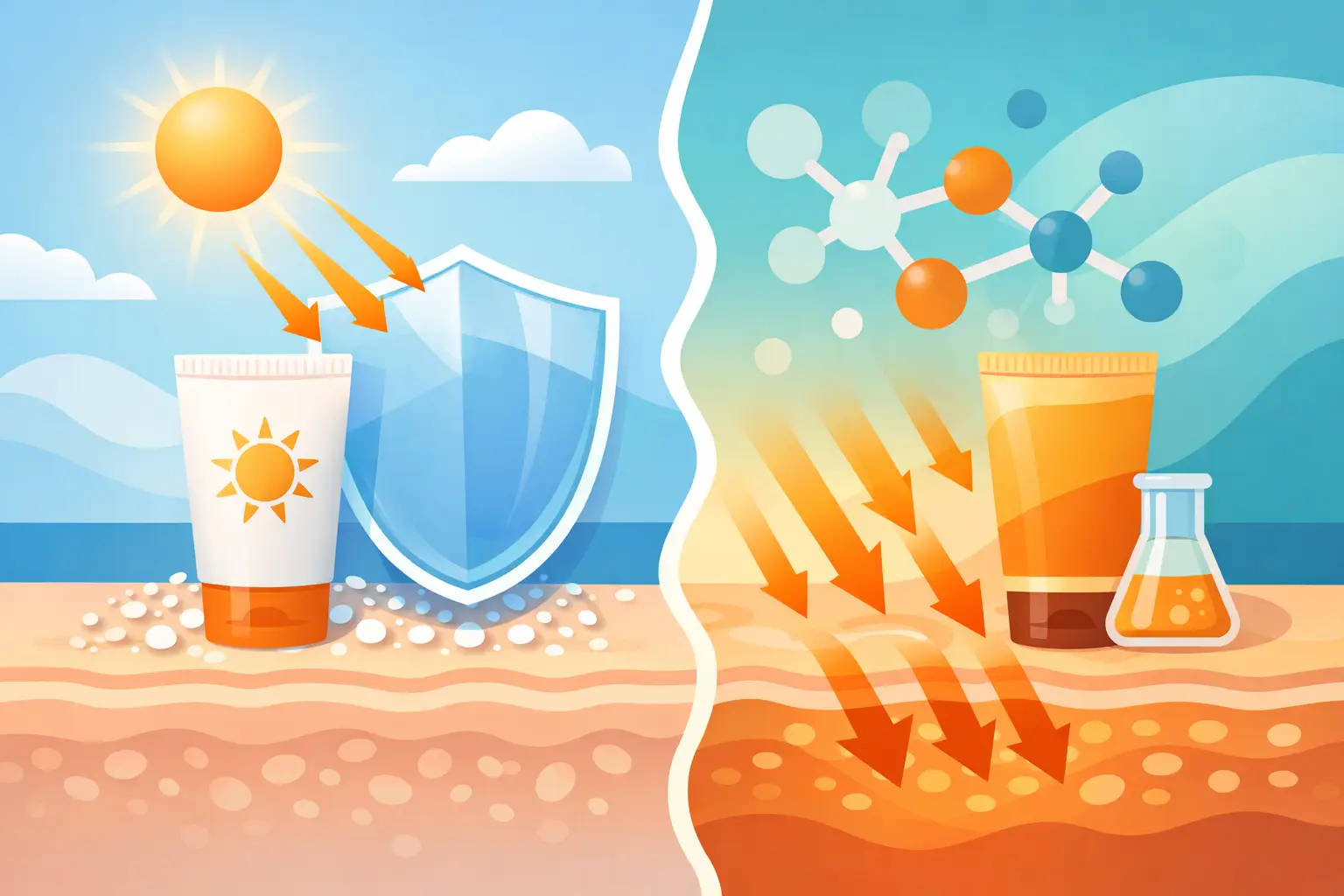
The simplest distinction is this: mineral sunscreen uses active ingredients such as zinc oxide and titanium dioxide, while chemical sunscreen uses filters like avobenzone, octocrylene, octisalate, or homosalate. Both are designed to protect skin from UV damage, but they do it in different ways and feel quite different in daily wear.
Mineral formulas sit on the skin’s surface and help deflect UV rays. Chemical formulas absorb UV radiation, convert it into heat, and release it from the skin. In practice, that means mineral sunscreens often feel thicker or leave more of a visible finish, while chemical sunscreens are usually lighter, more transparent, and easier to layer under make-up.
Neither type is automatically better in every situation. The better option depends on your skin type, your priorities, and whether a product fits your real life.
Why your sunscreen choice matters for healthy ageing
If healthy ageing is one of your long-term wellness goals, sunscreen is one of the least glamorous but most effective habits to get right. UV exposure is a major driver of visible skin ageing, including uneven tone, loss of firmness, and fine lines. It can also aggravate redness and leave skin looking more fatigued than it needs to.
That is why sunscreen belongs in the same conversation as nourishment, hydration, sleep, and stress support. Marine collagen, botanical adaptogens, protein pacing, and nutritional cleansing may all play a role in how supported and energised you feel from the inside, but daily UV protection helps protect what you are building on the outside. It is not about perfection. It is about stacking simple habits that support your skin and energy over time.
The case for mineral sunscreen
Mineral sunscreen is often recommended for sensitive skin, reactive skin, and post-treatment skin because it tends to be gentler. Zinc oxide in particular is widely appreciated for broad-spectrum protection and a lower likelihood of stinging the eyes.
If you have rosacea-prone skin, eczema tendencies, or simply find many SPF’s irritating, mineral formulas can be a reassuring place to start. Many people also like mineral sunscreen because it aligns with a more natural-leaning beauty routine.
The trade-off is texture. Some mineral sunscreens can feel heavier, look chalky, or leave a white cast, especially on deeper skin tones. Formulas have improved a great deal, but finish still varies. If you dislike how a sunscreen looks or feels, you are less likely to apply enough, and that reduces protection.
The case for chemical sunscreen
Chemical sunscreen often wins on cosmetic elegance. It tends to blend in more easily, feel lighter on the skin, and work well under make-up or during exercise. If you have oily skin or want something that disappears quickly, chemical formulas may be easier to stick with.
This matters more than people think. A sunscreen that feels invisible can make daily use far more realistic, particularly if you are rushing through a weekday routine or reapplying on the go.
The downside is that some people find chemical filters irritating, especially around the eyes. Fragrance and alcohol in certain formulas can add to that issue. If your skin is very sensitive, you may need a bit of trial and error.
Mineral sunscreen vs chemical for different skin types
If your skin is sensitive, dry, or easily flushed, mineral sunscreen is often the safer starting point. Look for fragrance-free options with moisturising support so the formula does not feel tight or drag across the skin.
If your skin is oily or blemish-prone, chemical sunscreen may feel more comfortable, particularly in lightweight gel or fluid textures. That said, some modern mineral sunscreens are surprisingly elegant, so it is worth trying both rather than assuming one category will not work for you.
If you have a deeper skin tone, chemical sunscreen has traditionally been easier to wear because of the reduced chance of white cast. Tinted mineral formulas are improving this, but shade matching still matters.
If you are active outdoors, sweating, or spending time on holiday, either type can work well as long as it is broad-spectrum and water-resistant where needed. The smartest choice is usually the one you will reapply properly.
What to look for on the label
Do not get too distracted by marketing language. The essentials are broad-spectrum protection, SPF 30 or above for daily use, and a texture you enjoy enough to apply generously.
For mineral sunscreen, check for zinc oxide or titanium dioxide as the active ingredients. For chemical sunscreen, look for modern UV filters and make sure the product offers UVA and UVB protection.
It is also sensible to consider how the sunscreen behaves with your full routine. If you already use a vitamin C serum, moisturiser, or make-up, a pilling sunscreen can quickly become a daily annoyance. A good sunscreen is not just effective in theory. It needs to work in your actual bathroom, on your actual face, on an ordinary Tuesday morning.
A wellness perspective: skin care is part of the bigger picture
At Vibrant Reset, we believe the most sustainable routines are the ones that support your whole life rather than one isolated goal. Sunscreen is a perfect example. Protecting your skin is not separate from supporting energy, confidence, and long-term wellbeing.
If you are focusing on weight management, it often helps to build routines that feel structured and repeatable. Protein pacing is useful here because evenly spaced protein across the day can help you feel satisfied and supported, making your habits easier to maintain. In the same way, applying SPF every morning removes decision fatigue and gives your future self a little more support.
Adaptogens are another example of simple wellness support with a practical role. Botanical adaptogens are plants traditionally used to help the body adapt to everyday stress. They are not magic, but they can be part of a more balanced routine when paired with restful sleep, movement, and mindful self-care. Stress and skin often show up together, so routines that feel calming and consistent matter.
Nutritional cleansing can also fit into this wider lifestyle approach when understood in a balanced way. Think of it less as extremes and more as a gentle reset that encourages mindful eating, hydration, and less reliance on ultra-processed convenience foods. When your nutrition is more intentional, your beauty choices often become more intentional too.
The science behind supportive nutrition does not need to be complicated. Undenatured whey is valued because it retains delicate protein fractions in a less altered state. Marine collagen is popular because it provides specific amino acids associated with skin structure. Botanical adaptogens are studied for how plant compounds interact with the body’s stress response. None of this replaces sunscreen, of course, but it shows how inner and outer care can work together in a thoughtful routine.
Just as an aside, you can check out all the above products along with many other excellent nutritional products at my Isagenix Official Associate Site
So, which should you choose?
If you want the shortest answer to mineral sunscreen vs chemical, it is this: choose mineral if sensitivity is your main concern, and choose chemical if wearability is your top priority. Then test that answer against your real life.
Do you avoid sunscreen because it stings? Start with mineral. Do you skip it because every SPF feels thick and greasy? Start with chemical. Do you want a more natural-leaning option but hate a chalky finish? Try a tinted mineral fluid. Do you spend long days outdoors? Prioritise water resistance and reapplication over ingredient debates.
The best sunscreen is the one that makes daily protection feel achievable, not aspirational.
You can Check Today’s Bundle Pricing and Learn More about a range of wellness and nutritional products on my Official Associate Site
The most empowering beauty choices are rarely about chasing trends. They are about learning what suits your skin, your schedule, and your wider wellbeing goals, then repeating it with confidence.
These statements have not been evaluated by the Food and Drug Administration. These products are not intended to diagnose, treat, cure, or prevent any disease. Weight loss results may vary.