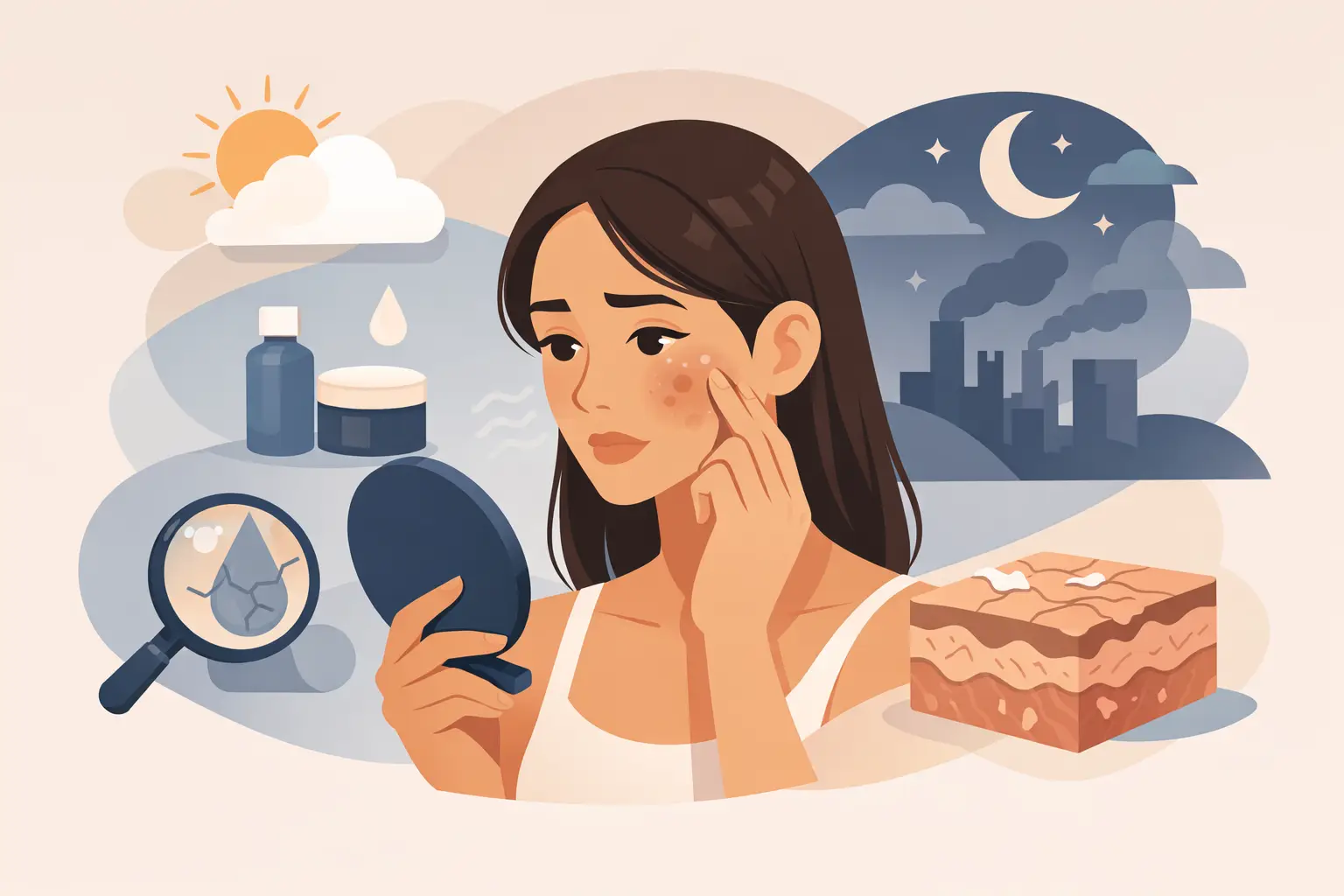
You catch your reflection in the bathroom mirror and think, why does my skin look dull when I am trying to do all the right things? It is a frustrating feeling, especially when you are drinking more water, spending money on skincare, and still not seeing that fresh, rested look you want. The good news is that dull-looking skin is usually not random. It is often your body and routine giving you useful feedback.
At Vibrant Reset, we believe glowing skin is rarely just about one cream or one “miracle” fix. It is often shaped by the small daily patterns that influence energy, weight management, and healthy ageing. When you support your body well, your skin often reflects that support.
Why does my skin look dull even with a skincare routine?
Dull skin usually means the surface is not reflecting light evenly. That can happen when dead skin cells build up, when skin is dehydrated, when your barrier feels stressed, or when circulation and recovery are not quite where they need to be. In simple terms, skin looks brighter when it is smooth, hydrated, calm, and well supported from within.
This is where many people get stuck. They focus only on products and overlook sleep, stress, nutrition, and consistency. A strong routine matters, but it works better when the basics underneath it are also in place.
If your skin looks flat, tired, rough, or a little uneven, there may be more than one reason. That is normal. Skin is a living organ, and it responds to the bigger picture.
The most common reasons skin loses its glow
One of the biggest causes is dehydration. Even if your skin is producing oil, it can still be short on water. Dehydrated skin often looks crepey, less bouncy, and slightly ashy rather than luminous. Heated indoor air, too much caffeine, poor sleep, and over-cleansing can all play a part.
Another common issue is a build-up of dead skin cells. Skin naturally renews itself, but that process can slow down with stress, age, poor sleep, and seasonal changes. When older cells sit on the surface for too long, they scatter light instead of reflecting it cleanly.
Stress is another major piece of the puzzle. When life feels full-on, your body prioritises survival over radiance. That can show up as tired-looking skin, uneven tone, dryness, or breakouts. Healthy ageing is not just about what you apply topically. It is also about how well you recover.
Then there is nutrition. If meals are irregular, heavily processed, or lacking in protein and key nutrients, your skin may not get the building blocks it needs to look firm and refreshed. This does not mean perfection is required. It means your everyday food pattern matters more than the occasional “healthy” choice.
Why nutrition matters more than people think
Skin renewal relies on amino acids, hydration, and a steady supply of vitamins, minerals, and antioxidants. This is one reason protein pacing can be so helpful. Rather than eating most of your protein in one sitting, protein pacing means spreading quality protein more evenly throughout the day. That can support energy, help with appetite balance, and give your body a more consistent supply of what it needs for maintenance and repair.
For people asking why does my skin look dull, this matters because skin is constantly renewing. If your body is under-fuelled or your meals are erratic, your skin may show it before anything else does.
Undenatured whey is an interesting product because it’s a high-quality protein source that stays in a more natural form during processing. In simple terms, that means it can help provide important amino acids in a way the body can use effectively. Those amino acids support normal repair processes throughout the body, including the tissues that contribute to skin’s healthy appearance.
Marine collagen is another ingredient many people find interesting for healthy ageing support. Collagen is one of the proteins that helps give skin its structure. As we get older, natural collagen production declines. Marine collagen supplements are popular because they offer smaller collagen peptides, which are easier for the body to absorb. They are not a magic wand, but they can sit well within a broader routine focused on nourishment, hydration, and consistency.
The role of adaptogens in tired-looking skin
Botanical adaptogens are often used to support the body during periods of physical and mental stress. You may have heard of ingredients such as ashwagandha, rhodiola, or holy basil. In simple terms, adaptogens are plants traditionally used to help the body stay more balanced when life feels demanding.
That matters for skin because chronic stress can affect sleep, cravings, hydration habits, and overall resilience. When your body feels stretched, your skin can look it too. Adaptogens do not replace rest, proper meals, or skincare, but they may complement a more balanced wellness routine in a practical way.
For many adults juggling work, family, and personal goals, a calmer, steadier daily rhythm can support better energy and more intentional self-care. That ripple effect often matters just as much as the ingredient itself.
At this point I would like to point out that I am an Isagenix independent associate and all the above products can be checked out at my Official Associate Site
Can nutritional cleansing help dull skin?
Nutritional cleansing is sometimes misunderstood. It is not about punishing restriction or harsh quick fixes. At its best, it is about giving your body a short period of simpler, more mindful support by reducing excess and refocusing on nutrient intake, hydration, and routine.
For someone with dull-looking skin, that can be useful because it often encourages better choices across the board. People may become more aware of sugar-heavy snacking, low water intake, and irregular eating habits that leave them feeling sluggish. A thoughtful nutritional cleansing approach can help reset those patterns and support energy, weight management, and a sense of lightness.
The key is balance. If a plan leaves you exhausted, hungry, or obsessed with food rules, it is probably not supporting your glow. A supportive reset should feel structured, realistic, and nourishing.
What to change first if your skin looks dull
Start with the basics and give them time. Cleanse gently, moisturise consistently, and avoid over-scrubbing in the hope of forcing brightness back into your skin. Very aggressive exfoliation can leave skin irritated and even duller.
Then look at your daily rhythm. Are you eating enough protein across the day? Are you sleeping properly most nights? Are you moving your body enough to support circulation and energy? Are stress and screen time quietly eating into your recovery?
This is where a wellness-first approach makes sense. A brighter complexion often follows when your routine supports your whole body. It is less glamorous than a trend-led fix, but it is usually more effective.
If you are building a supportive plan, it can help to include high-quality protein, hydration support, collagen-focused nutrition, and botanical adaptogens where they suit your lifestyle. The “why” behind these products is straightforward. Protein provides the raw materials your body uses every day. Marine collagen supports structure-focused nutrition for healthy ageing. Adaptogens help support balance when stress is high. Put together with better daily habits, they can become part of a routine that helps you feel more energised and look more refreshed.
You can Check Today’s Bundle Pricing and Learn More on My Official Associate Site
A healthier glow usually starts before the mirror
If you keep asking, why does my skin look dull, try shifting the question slightly. Instead of asking what product will fix it fastest, ask what your body may be asking for more consistently. Better hydration, steadier protein intake, mindful nutritional cleansing, and support for stress can make a real difference over time.
Glowing skin is not about chasing perfection. It is often a sign that your habits are beginning to work with your body instead of against it. Refresh your life by starting small, staying consistent, and trusting that the right support can help you feel better in your skin and in yourself.
These statements have not been evaluated by the Food and Drug Administration. These products are not intended to diagnose, treat, cure, or prevent any disease. Weight loss results may vary.